Mudjacking is a concrete lifting method that pumps a grout-based mixture beneath a settled slab. The material fills unsupported areas and creates controlled pressure that helps raise the concrete back toward a more level position.
It can be used for many residential and commercial surfaces, including driveways, sidewalks, patios, porches, garage floors, steps, and larger concrete slabs. You can see the full process on our Concrete Leveling Process page.
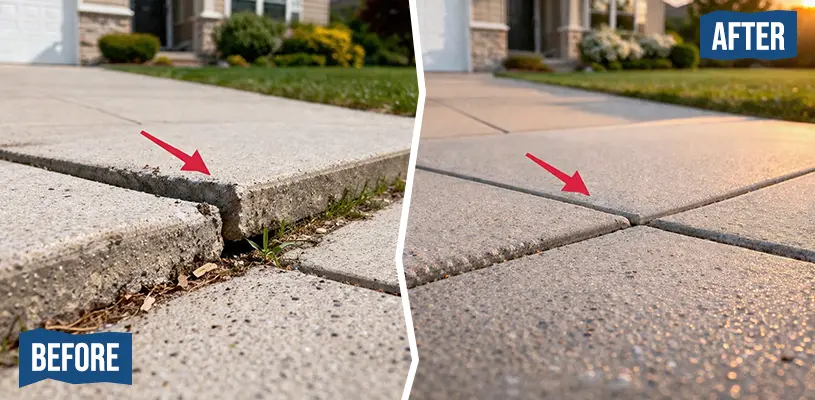
The terms are often used together. Concrete lifting describes raising a sunken slab, while concrete leveling refers to improving the position and height of uneven concrete.
Mudjacking is one method of concrete raising and leveling. If your slab has dropped but is still structurally sound, lifting may be an option instead of replacement. Our Residential Concrete Lifting page explains where the process can be used around a home.
Slabjacking is a broad term for raising a concrete slab by placing material underneath it. Mudjacking is a traditional form of slabjacking that uses a grout-based material to fill voids and lift the slab.
We use mudjacking for projects such as Driveway Leveling, Patio Lifting, and other settled concrete surfaces.
No. St. Louis Mudjacking specializes in traditional mudjacking only.
Some concrete leveling companies use polyurethane foam, often called polyjacking or foam lifting. Those are different methods. Our site focuses on grout-based mudjacking because that is the concrete lifting service we provide.
Mudjacking can be used on many types of settled concrete when the slab itself is still in suitable condition. Common applications include driveways, sidewalks, walkways, patios, porches, garage floors, pool decks, steps, concrete slabs and other concrete floors.
For example, you can learn more about Sidewalk & Walkway Lifting or Concrete Slab Lifting.
Mudjacking can often be more affordable than tearing out and replacing concrete because the existing slab remains in place.
The actual cost depends on the size of the area, how much lifting is required, accessibility, and the condition of the concrete. If you have a settled Driveway or another slab, contact us for a project-specific quote.
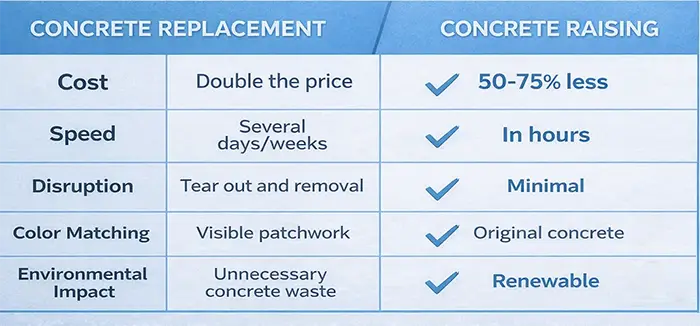
There is no one price that applies to every concrete lifting project.
A small walkway section and a large driveway or commercial slab require different amounts of material, labor, and setup. The best way to get accurate pricing is to Contact St. Louis Mudjacking and tell us about the area that needs attention.
Yes. You can request a free quote by calling us or submitting the contact form with details about the sinking or uneven concrete.
Visit our Contact Page to get started.
It helps to tell us where the concrete is located, what type of slab it is, how much it appears to have settled, and whether there are visible cracks or drainage issues.
For larger commercial work, it is also useful to identify the property type and areas involved. You can see examples of the projects we handle on our Commercial Mudjacking page.
Settlement often becomes more noticeable over time, especially if soil movement, drainage, or washout continues beneath the slab.
Addressing uneven concrete earlier can help reduce trip hazards and prevent the surface from becoming harder to use. If you are unsure whether the slab is a good candidate for lifting, request an evaluation through our Contact Page.
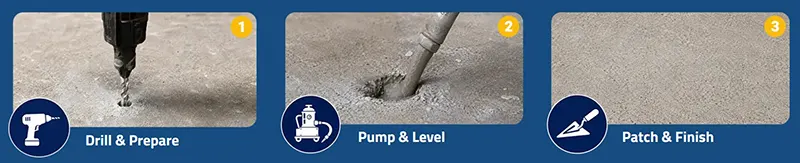
The basic process has three stages: drill, pump, and patch.
Access holes are drilled through the slab, a grout-based material is pumped underneath to fill voids and lift the concrete, and the holes are patched when the lifting is complete. See our Concrete Leveling Process page for a complete explanation.
Project time depends on the number of slabs, the amount of settlement, access to the work area, and how much material is needed.
Smaller residential jobs may be completed relatively quickly, while larger commercial or multi-slab projects can take longer.
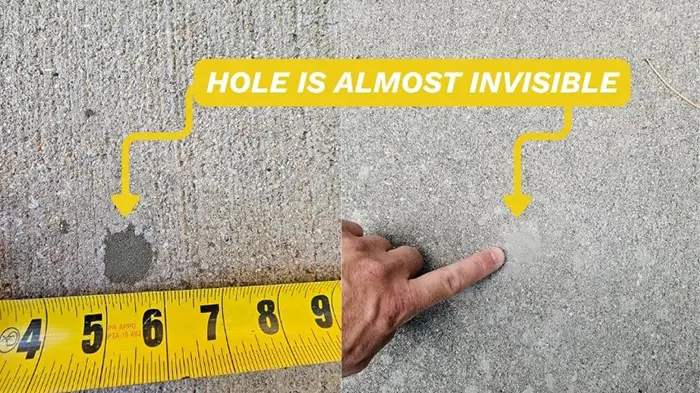
The access holes are patched after the lifting is complete.
The patches may remain visible, especially on older or weathered concrete, because new patch material will not always match the existing slab exactly. The goal is to leave the area neat and functional.
The amount a slab can be raised depends on the concrete, surrounding surfaces, joint locations, and how it settled.
The goal is controlled concrete raising—not forcing a slab beyond what the conditions allow. We lift gradually and aim for a practical improvement in position and usability.
Return-to-use time can vary depending on the type of surface and work performed.
We will explain what to expect for your specific project once the lifting is complete. This is especially important for areas such as Garage Floors and driveways that may carry vehicle traffic.
Concrete usually sinks because the soil beneath it loses support. Common causes include soil settlement, poorly compacted fill, water washout, clay soil movement, drainage problems, and freeze-thaw cycles.
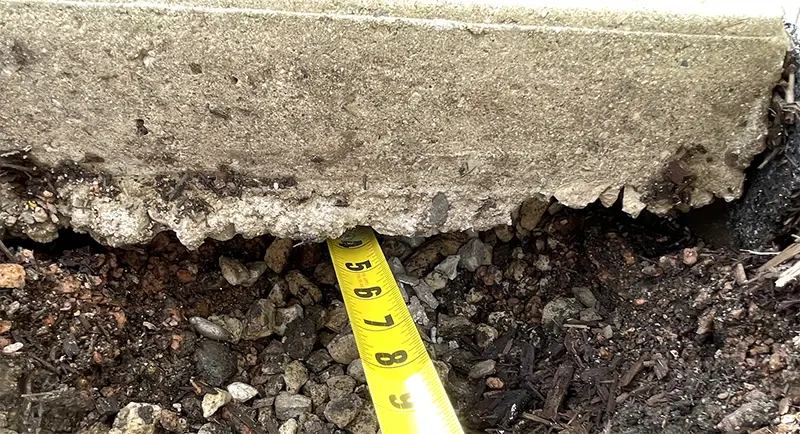
These conditions are common throughout the St. Louis area and can affect everything from a Driveway to a Porch.
Yes. Raised edges and low slabs can create trip hazards around sidewalks, steps, entrances, patios, and commercial walkways.
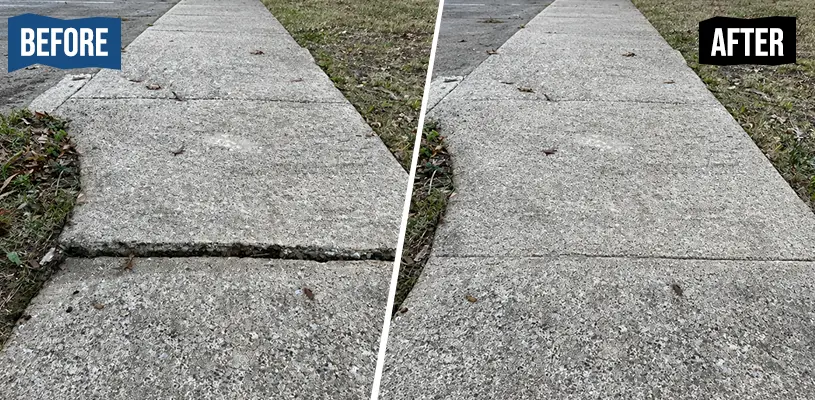
Concrete leveling can help restore a smoother transition when the slab is still worth saving. If the problem is along a pedestrian route, see our Sidewalk & Walkway Lifting service.
It can. When a slab settles, the slope may change and allow water to collect in low spots or move toward areas where you do not want it.
Concrete lifting may help when the drainage issue is caused by slab settlement, although other drainage problems may also need attention. This is common with Patio Lifting and driveway projects.
A hollow sound can sometimes indicate that a void has developed beneath the slab. Soil may have settled or washed away, leaving part of the concrete unsupported.
Depending on the condition of the slab, the area may need concrete stabilization, lifting, or Void Filling.
No. Concrete lifting changes the position of the slab, but it does not erase existing cracks, stains, surface wear, or deterioration.
If a slab is still structurally sound, raising it can improve usability and alignment even though the concrete will not look brand new. If the slab is badly cracked or crumbling, replacement may be the better concrete repair option.