
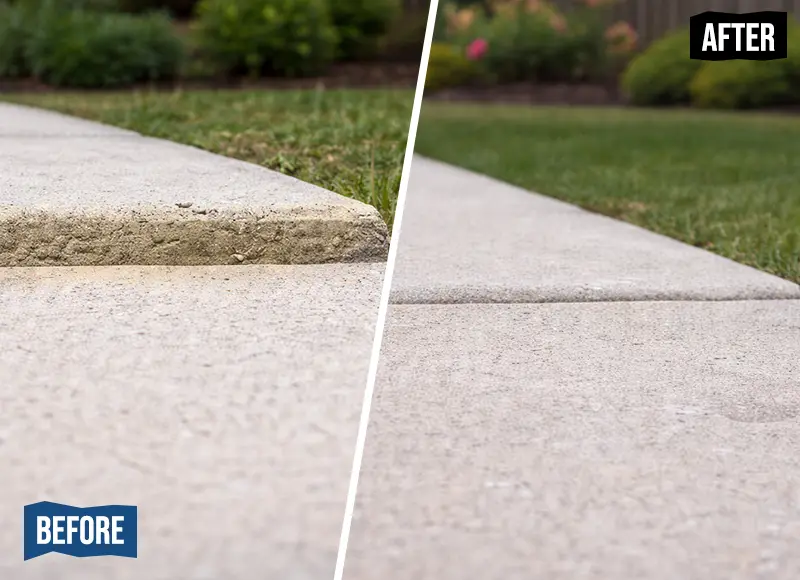
 That bump at the garage entrance didn’t always exist. Neither did the raised sidewalk edge or the puddle that now sits on your patio after every storm.
Concrete settlement often starts slowly. One section drops a little, then the uneven surface becomes hard to ignore. For homeowners in St. Louis and across the Midwest, the cause often lies below the slab.
The short answer: Concrete sinks when the ground underneath can no longer support it evenly. Water, changing soil moisture, winter weather, and poorly packed fill can all play a role.
1. Water Washes Away the Support
A concrete slab needs a stable base. When water repeatedly flows beneath it, that support can start to disappear.
A downspout emptying beside the driveway, runoff crossing a patio, or water entering open joints can carry away soil and small particles. Over time, empty spaces develop beneath the concrete. With less material holding it up, part of the slab can drop.
Once concrete sinks, the new slope may send even more water toward the problem area. That is why checking drainage matters just as much as noticing the uneven surface.
2. Clay Soil Changes with the Weather
Some clay soils swell when they absorb moisture and shrink as they dry. That movement can affect the concrete resting above them.
Think about a wet spring followed by a long, dry summer. Where expansive clay is present, shrinking soil can leave a slab with less support. The amount of movement depends on the soil and conditions at the property.
“Clay-heavy soils that expand and contract”
— Foamjection, identifying a common cause of settlement in its Ohio concrete lifting guide. This article draws on Foamjection’s published insight into the soil conditions behind sinking concrete.
3. Freezing and Thawing Move the Ground
Midwest winters add another challenge. In frost-sensitive soil, growing layers of ice can push the ground and concrete upward. This movement is called frost heave.
When that ice melts, the ground can settle again. Wet soil may also provide weaker support during the thaw. If one section moves more than another, the surface can become uneven.
A sidewalk that rises in winter and drops in spring may have a seasonal movement problem. Tell your contractor when you notice changes so the inspection considers more than the slab’s height on one day.
4. The Original Fill Wasn’t Packed Firmly Enough
Not every sinking slab starts with a weather problem. Sometimes the issue goes back to construction.
Builders move soil to install foundations, utilities, and other features. If the replaced soil is not compacted properly before concrete is poured, it can settle later under its own weight and the weight above it.
This can leave concrete near a house or utility trench sitting over an uneven base. The surface may look fine at first, while settlement develops over time.
 What Should You Watch For?
- A growing drop where the driveway meets the garage.
- Sidewalk edges that catch your shoes or trip visitors.
- Water pooling on concrete or flowing toward the house.
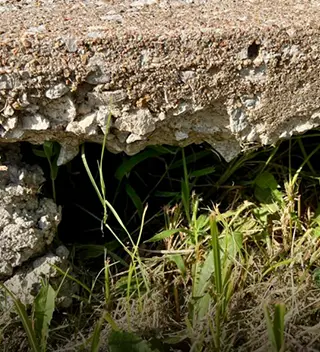
- Visible gaps beneath the edges of patios or walkways.
- Slabs that tilt or sit lower than neighboring sections.
Take photos of changes and check where water goes during rain. Those details can help a contractor understand what is happening beneath the surface.
Can You Help Prevent More Settlement?
Start with water management. Keep gutters clear, check downspout outlets, and look for soil washing away along slab edges. Have leaking drains or pipes repaired, and ask about sealing open concrete joints where appropriate.
These steps cannot undo existing settlement or guarantee that soil will stop moving. They can help reduce avoidable water problems around your concrete. If an area keeps sinking after a repair, it deserves a closer look at the underlying cause before another repair is planned.
Does Sunken Concrete Need to Be Replaced?
Not always. If the slab is still in suitable condition, mudjacking may lift it without removing the existing concrete.
St. Louis Mudjacking pumps a grout mixture beneath settled slabs to fill voids and carefully raise the surface. Badly crumbled or severely broken concrete may need replacement instead.
Repair planning should also address drainage or other conditions causing the settlement. Raising a slab does not fix a leaking pipe or redirect a downspout.
Get Answers About Your Sinking Concrete
An uneven driveway or walkway does not automatically mean a full tear-out. Find out what caused the problem and whether your concrete can be lifted.