Concrete Leveling
Process
SEE HOW SUNKEN CONCRETE GETS LIFTED
How Does Mudjacking Lift Sunken Concrete?
When concrete starts to sink, the problem is usually underneath the slab.
Soil can settle, wash away, shrink, or lose support over time. As that support changes, driveways, sidewalks, patios, garage floors, and other concrete slabs can begin to drop or become uneven.
St. Louis Mudjacking uses a proven grout-based process to fill unsupported areas beneath the concrete and carefully raise settled slabs back toward the proper level.
Our 3-Step Mudjacking Process
How Mudjacking Works
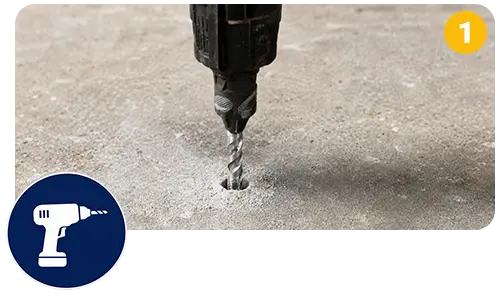
Drill & Prepare
Small access holes are drilled through the settled concrete in carefully selected locations.
These holes allow us to reach the empty or weakened areas beneath the slab.
The number and placement of the holes depend on the size of the concrete, how it has settled, and where support is needed.
The goal is to create access without removing the existing slab.
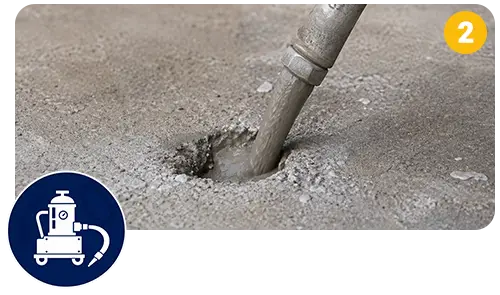
Pump & Level
A grout-based mudjacking mixture is pumped beneath the concrete through the access holes.
As the material moves beneath the slab, it fills voids and restores support in areas where the soil has settled or washed away.
Controlled pressure is used to gradually raise the concrete.
The slab is not simply forced upward all at once. The lifting is done carefully so the concrete can be brought back toward the proper position as evenly as possible.
This is the part of the process that does the actual lifting.
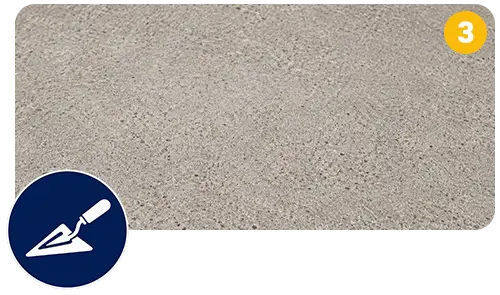
Patch & Finish
Once the slab has been raised to the appropriate position, the pumping stops.
The access holes are then patched, and the work area is cleaned up.
The patches may remain visible, especially on older concrete, but the goal is to leave the surface neat and usable.
What Happens Before the Lifting Starts?
Before any material is pumped beneath the slab, the concrete needs to be evaluated.
We look at the condition of the slab, how far it has settled, where the low areas are, and whether the concrete appears solid enough to lift.
Not every slab is a good candidate for mudjacking.
Concrete that is badly cracked, crumbling, or structurally worn out may be better suited for replacement. If lifting does not make sense, we will tell you.
Common areas we evaluate include:
- Driveways
- Sidewalks and walkways
- Patios
- Garage floors
- Porches
- Steps and entry areas
- Pool decks
- Concrete slabs
- Commercial walkways and exterior concrete
- Areas with visible voids beneath the slab
If you are dealing with a specific problem, you can also learn more about Driveway Leveling, Sidewalk & Walkway Lifting, and Concrete Slab Lifting.

What Is Pumped Under the Concrete?
Mudjacking uses a grout-based mixture that is pumped beneath the slab.
The material is designed to fill unsupported areas and provide support beneath the concrete while the slab is being raised.
This is different from simply filling a crack at the surface.
The repair works from underneath the slab, where the loss of support originally caused the settlement.
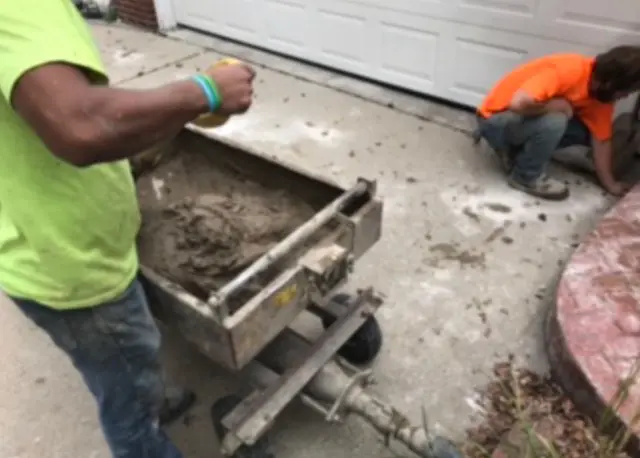
Why Concrete Needs Support From Below
Concrete is strong, but it still depends on the ground underneath it.
When that support disappears, the slab may begin to sink even if the concrete itself is still in good condition.
Common reasons support is lost include:
- Soil settlement over time
- Poorly compacted fill beneath the original slab
- Clay soil movement as moisture levels change
- Water washout beneath concrete
- Drainage problems around the property
- Freeze-thaw cycles that contribute to soil movement
- Voids beneath slabs that leave sections unsupported
These conditions are common throughout the St. Louis area, where clay-heavy soil and changing weather can affect the ground beneath concrete.
How Long Does the Mudjacking Process Take?
The amount of time depends on the size of the project, the number of slabs being lifted, and how much settlement has occurred.
Smaller jobs may be completed relatively quickly. Larger or more complicated projects can take longer.
Because mudjacking works with the existing concrete, it can often involve less disruption than tearing out and replacing the slab.
What Can Mudjacking Help Correct?
Mudjacking can be useful when the slab is still structurally sound but has settled out of position.
It may help with:
- Uneven slab edges
- Trip hazards
- Low sections of driveways
- Settled sidewalks
- Patio slabs that have dropped
- Garage floor sections that are no longer level
- Porch or entry slabs that have settled
- Pool deck sections with uneven transitions
- Commercial walkways and concrete areas
- Voids beneath existing concrete
For unsupported areas where lifting may not be the main goal, see our Void Filling service.
15+
Years of Experience
1000+
Projects Completed
St. Louis
Local & Family-Owned
100%
Committed to Quality
What Should You Expect After Mudjacking?
The main goal is to improve the position and usability of the existing slab.
Mudjacking may help:
- Reduce uneven transitions
- Correct certain trip hazards
- Restore support beneath the concrete
- Improve low spots
- Improve certain drainage problems caused by settlement
- Make driveways, sidewalks, patios, and other surfaces easier to use
It is important to have realistic expectations.
Mudjacking does not make old concrete new again. Existing stains, cracks, discoloration, and normal surface wear will still be there after the slab is lifted.
What changes is the position of the concrete.
When Is Mudjacking Not the Right Solution?
Mudjacking is designed to lift concrete that has settled.
It does not repair concrete that is already badly deteriorated.
Replacement may make more sense when the slab has:
- Extensive cracking
- Severe surface deterioration
- Crumbling concrete
- Major structural damage
- Large broken sections
- Damage that prevents the slab from lifting as a unit
We would rather give you a straightforward answer than recommend lifting concrete that is no longer worth saving.
PROUDLY SERVING THE ST. LOUIS AREA
Mudjacking Across St. Louis County
We help homeowners, businesses, property managers, and organizations throughout the St. Louis metro area fix sinking and uneven concrete.
Our service area includes communities across St. Louis County, St. Charles County, and surrounding areas.
Areas We Serve Include:
- Chesterfield
- St. Charles
- Ballwin
- O’Fallon
- Florissant
- Kirkwood
- Wildwood
- Creve Coeur
- Maryland Heights
- St. Peters
- Wentzville
- Webster Groves
- Fenton
- Clayton
- University City
- Manchester
- Des Peres
- Ladue
- Frontenac
- Lake St. Louis
- Eureka
- Cottleville
- Brentwood
- Hazelwood
- Bridgeton
- Ferguson
- St. Ann
Don’t See Your City Listed?
Give us a call. We may still provide mudjacking service in your area.
A Nick Gress Foundations Company
Uneven concrete does not get better on its own. St. Louis Mudjacking helps homeowners, businesses, property managers, and municipalities lift and level settled concrete using proven mudjacking methods.
Mudjacking and concrete leveling services throughout the St. Louis metro and St. Charles County, including:
Chesterfield, St. Charles, Ballwin, O’Fallon, Florissant, Kirkwood, Wildwood, Creve Coeur and surrounding communities.
Need an estimate? Call us today.
Residential Services
Commercial Services
Get an Estimate
Have a sinking driveway, uneven sidewalk, settled patio, or another concrete problem?
Call St. Louis Mudjacking and tell us what is going on. We will help you determine the next step.
Call Today
Hours We’re Open
Mon – Sun: 7am – 9pm
Voicemail open 24 hours.
© 2026 Mudjacking St Louis. All Rights Reserved.